Kitchens carry a strange kind of pressure. They’re the hardest-working rooms in most homes, the ones guests gravitate toward, and the ones that date themselves the fastest. When the cabinets start looking tired or the countertops feel like they belong in another decade, the instinct is to tear everything out and start over. That instinct is expensive.
The good news is that a kitchen doesn’t need a gut renovation to feel brand new. Smart, targeted changes often create more visual impact per dollar than a full teardown ever could. Paint, hardware, lighting, and a few well-chosen swaps can shift the mood of the entire room without touching the plumbing or the studs.
This piece compares the most popular budget-friendly approaches side by side — what each one costs, what it actually changes, and when it makes sense to combine strategies. By the end, you should have a clearer picture of which path fits your home, your timeline, and the number in your bank account.
Why a Full Remodel Isn’t Always the Smart Move
Big renovations get big attention, but the math isn’t always on your side. According to Florida Realtors, a medium kitchen renovation in 2025 runs around $71,159 and a large one can hit $137,228, with a possible 60% return on investment at resale. That’s a lot of money to front, and you’re not getting all of it back.
Compare that to a minor remodel. According to Angi, minor kitchen remodels average about 96% ROI based on Remodeling’s 2024 Cost vs. Value Report, while major remodels return closer to 50% on average. The pattern is consistent: smaller, smarter projects almost always outperform sprawling ones on a dollar-for-dollar basis.
Before committing to a wrecking ball, it helps to understand how to plan a home remodel in stages — tackling cosmetic wins first and saving structural work for when it’s truly necessary. That staged mindset is what separates a stressful money pit from a satisfying refresh.
Paint vs. Replace: The Cabinet Question
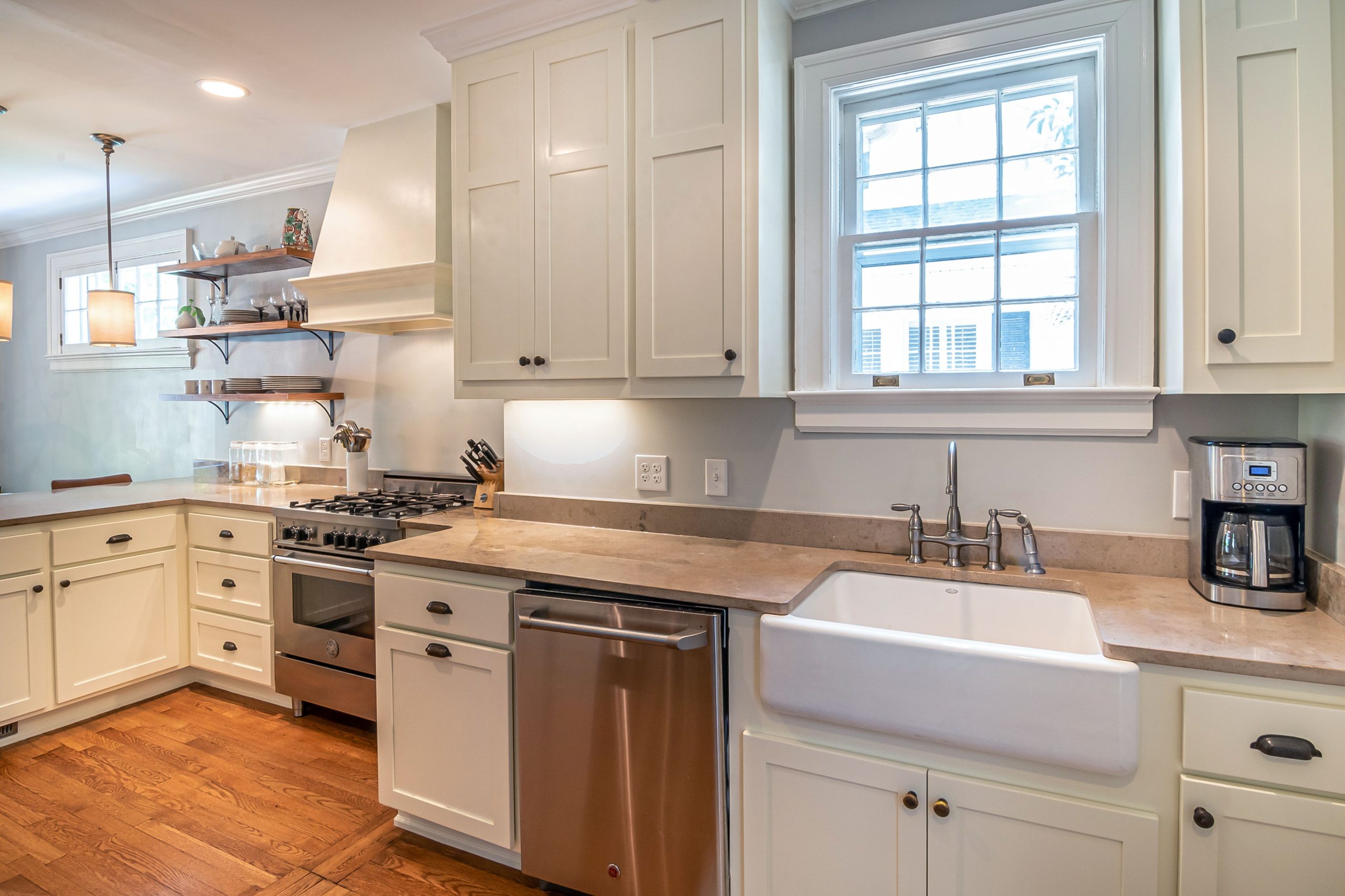
Cabinets eat up the biggest chunk of any kitchen budget. New ones can run tens of thousands of dollars installed. Painting the existing boxes and doors, by contrast, usually costs a few hundred in supplies plus a weekend of work.
The trade-off is finish quality and durability. Factory-painted cabinets hold up better over years of greasy fingerprints and steam. DIY paint jobs can look fantastic for the first few years but may chip around high-touch areas. If your cabinet boxes are structurally solid, painting wins on cost and speed almost every time.
When Painting Makes Sense
Not every cabinet is a good candidate. Here’s a quick check:
- The boxes are solid wood or quality plywood, not particleboard that’s swelling
- The doors still close square and aren’t warped
- You’re willing to remove hardware, sand, prime, and apply multiple thin coats
- You like the current layout and don’t need more storage
- You can live without the kitchen for about a week while things cure
If you check most of those boxes, paint is the budget champion. If the cabinets are falling apart or the layout is genuinely dysfunctional, no amount of paint will save them.
Hardware, Lighting, and the Small Swaps That Punch Above Their Weight
Swapping cabinet pulls and knobs is one of those changes that sounds trivial until you do it. New brushed brass or matte black hardware instantly modernizes doors that otherwise look stuck in another era. Budget around $3 to $8 per piece, and plan for a couple of hours with a drill.
Lighting is the other quiet overachiever. Replacing a dated flush-mount fixture with a modern pendant, or adding under-cabinet LED strips, changes how the whole room reads at night. You’re not just adding brightness — you’re adding mood, which is what makes a kitchen feel welcoming instead of utilitarian.
Here’s where the small-swap budget usually lands:
- Cabinet hardware for a standard kitchen: $80 to $250
- A single statement pendant or small chandelier: $100 to $400
- Under-cabinet LED kit: $40 to $150
- New faucet with a pull-down sprayer: $120 to $350
- Fresh outlet covers and switch plates: $20 to $60
Stack two or three of these together and you’ve transformed the room for less than the cost of a single new appliance.
The Fix & Refresh Path vs. the Semi-Pro Upgrade
There’s a real decision point between doing cosmetic work yourself and bringing in pros for a partial renovation. The Fix & Refresh approach leans heavily on paint, hardware, lighting, peel-and-stick backsplash, and maybe a new sink and faucet. The semi-pro upgrade keeps the layout but swaps in new countertops, real tile, and possibly new cabinet fronts.
According to Renhive, a DIY-led kitchen refresh runs $1,500 to $5,000 in 2026, while a semi-professional upgrade in the same layout lands between $15,000 and $30,000. That’s a big gap, and the right choice depends on how much the current kitchen bothers you on a daily basis.
Deciding Between the Two Lanes
Ask yourself a few honest questions. Does the kitchen just look dated, or does it genuinely function poorly? Are the countertops scratched and stained, or just a color you don’t love? Can you tolerate living with imperfect results to save five figures?
If the answers lean cosmetic, stay in the DIY lane. If the countertops are chipped laminate and the sink basin is cracked, the semi-pro route earns its price tag because those are jobs where amateur work shows immediately.
Where to Spend and Where to Save
Not every dollar carries the same weight in a kitchen. Some upgrades get noticed every single day, while others disappear into the background within a week. According to Kitchen Cabinet Kings, a minor kitchen remodel in the $28,000 to $30,000 range delivers 112.9% ROI nationally per the 2025 Zonda Cost vs. Value Report — the strongest return of any interior project. That sweet spot exists because it targets the right upgrades, not because it throws money everywhere.
Here’s a rough priority list when every dollar matters:
- Spend on countertops if yours are damaged — they’re a daily visual anchor
- Save on backsplash with peel-and-stick tile that mimics the real thing
- Spend on a quality faucet because you touch it every day
- Save on cabinet hardware by shopping bulk online instead of boutique
- Spend on paint quality; cheap enamel will not hold up
- Save on appliances by buying floor models or last year’s stock
The pattern is straightforward. Spend on the things your hands and eyes touch most, and cut costs on the things that just need to look right from across the room.
Timing, Sequence, and the Danger of Doing Too Much at Once
A budget refresh goes sideways when people try to do everything in one chaotic weekend. The smarter move is sequencing. Paint the cabinets first, because every other decision — hardware finish, countertop color, backsplash style — reads differently against a new cabinet color.
Then move to hardware and lighting, which are reversible and cheap enough to experiment with. Countertops and backsplash come last, since they commit you to a longer-term look and you’ll want to see how the earlier changes landed before locking in tile or stone.
This sequencing also protects your budget. You might discover that after paint and new pulls, the countertops bother you less than you thought. That realization alone can save thousands. Rushing every decision into one weekend tends to produce a kitchen that feels busy rather than considered, and busy kitchens age faster than calm ones.
Conclusion
A kitchen update does not have to mean a demolition. The comparison across approaches keeps pointing to the same lesson: smaller, well-sequenced projects deliver stronger returns and more livable results than gut renovations in most homes. Paint, hardware, lighting, and a handful of targeted swaps consistently outperform their price tags.
The right path depends on honest answers about what actually bothers you in the current space. Cosmetic complaints call for cosmetic fixes. Functional problems justify bigger spends, but only after the easier wins are on the table. Either way, staging the work and resisting the urge to tackle everything at once protects both the budget and the final look.
Kitchens reward patience and restraint far more than they reward big swings. Start with the cheapest change that will make the biggest difference, live with it for a bit, and let the next step reveal itself. That’s how a modest budget turns into a space that feels genuinely new.